Beaver Worksheet Download
Free reading worksheets on Beaver. Each worksheet has 20 problems with an answer key and are ideal for teachers and homeschooling. You can download the PDF, create a set of flash cards or set it up for online learning.
Select a Different Activity
>
Sheet Information >
Available at 2nd grade, 3rd grade, 4th grade, 5th grade and 6th grade reading levels.
Read the passage
Beavers are fascinating creatures that live in water and on land. These amazing animals are known for their strong teeth and ability to build impressive homes called lodges. Beavers are mostly found in North America and Europe, living in rivers, streams, and ponds.
These furry friends are herbivores, which means they eat plants. Some of their favorite meals include leaves, bark, and twigs from trees like willow and aspen. During winter, they store food underwater so they can munch on it even when the water is frozen.
Beavers are important to their ecosystems and have relationships with humans and other animals. They create wetlands that provide homes for many other species, while their dams can help prevent flooding. However, sometimes beavers and humans come into conflict when their dams cause damage to property or when they are considered pests.
Hey kids, let\'s talk about beavers, some really cool animals that you might find near rivers and ponds! Beavers are large, brown, furry rodents with flat tails that help them swim really well. They live in cozy homes called lodges, which they build using sticks and mud near the water. Beavers are known for their amazing building skills, creating dams in rivers to create calm waters for their homes.
Now, let\'s learn about what beavers eat and their life cycle. Beavers are herbivores, which means they only eat plants like leaves, twigs, and the bark of trees. In their life cycle, baby beavers, called kits, are born in the spring and stay with their parents for about two years before finding their own territory. Beavers can live for up to 15 years in the wild, which is pretty impressive!
Lastly, let\'s explore their relationships with humans, other animals, and some interesting facts. Beavers are very important to their ecosystems as they help create new habitats for other animals and plants by building their dams. However, sometimes their dams can cause problems for humans by flooding areas or cutting down trees. Did you know that beavers have special transparent eyelids that work like goggles when they\'re underwater? How cool is that!
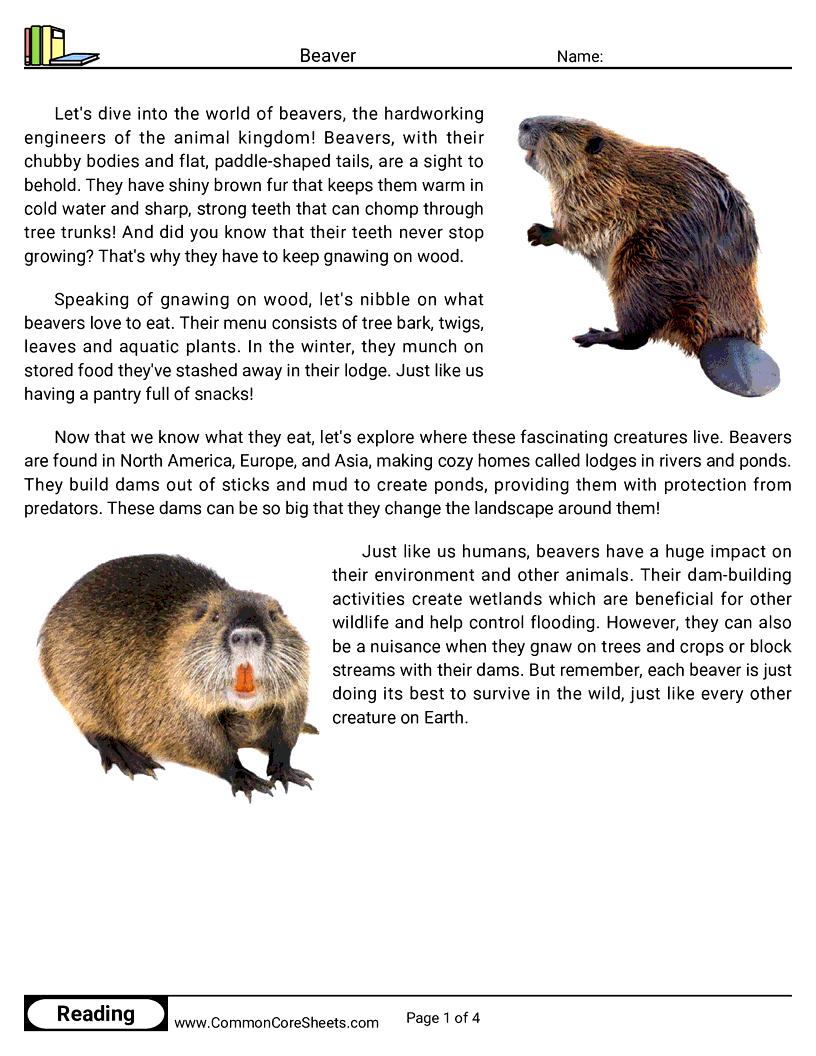
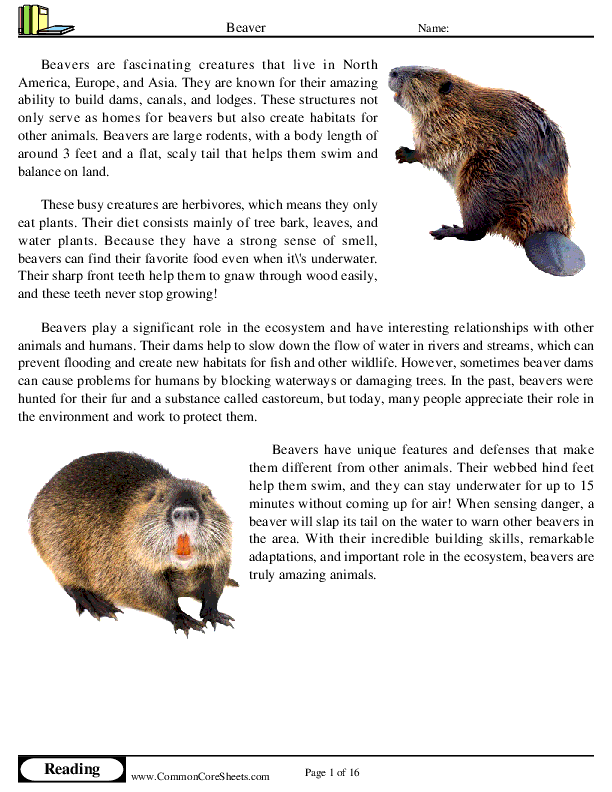
Let's dive into the world of beavers, the hardworking engineers of the animal kingdom! Beavers, with their chubby bodies and flat, paddle-shaped tails, are a sight to behold. They have shiny brown fur that keeps them warm in cold water and sharp, strong teeth that can chomp through tree trunks! And did you know that their teeth never stop growing? That's why they have to keep gnawing on wood.
Speaking of gnawing on wood, let's nibble on what beavers love to eat. Their menu consists of tree bark, twigs, leaves and aquatic plants. In the winter, they munch on stored food they've stashed away in their lodge. Just like us having a pantry full of snacks!
Now that we know what they eat, let's explore where these fascinating creatures live. Beavers are found in North America, Europe, and Asia, making cozy homes called lodges in rivers and ponds. They build dams out of sticks and mud to create ponds, providing them with protection from predators. These dams can be so big that they change the landscape around them!
Just like us humans, beavers have a huge impact on their environment and other animals. Their dam-building activities create wetlands which are beneficial for other wildlife and help control flooding. However, they can also be a nuisance when they gnaw on trees and crops or block streams with their dams. But remember, each beaver is just doing its best to survive in the wild, just like every other creature on Earth.
Beavers are fascinating creatures that can be found in North America and Europe. These furry animals have brown fur and flat, wide tails that help them swim. Beavers are known for their incredible ability to build dams and lodges using sticks, mud, and rocks. Their strong teeth can chew through trees, which they use as building materials and food.
One interesting fact about beavers is their diet, which mainly consists of plants. Beavers love to eat the bark of trees, especially willow, aspen, and cottonwood trees. They also enjoy munching on roots, leaves, and twigs, as well as aquatic plants that grow near their homes. Their sharp teeth continue to grow throughout their lives, allowing them to keep chewing on hard materials.
Beavers can be found living in various habitats, including rivers, lakes, and wetlands. They build their homes, called lodges, in the middle of bodies of water for safety from predators. Inside the lodge, there are separate rooms for eating, sleeping, and raising their young. Beavers are very social animals, living in groups called colonies, which are made up of family members.
When it comes to their life cycle, beavers are quite fascinating. They mate for life, and after a gestation period of about three months, a female beaver gives birth to one to four kits. The kits stay with their parents for about two years, learning important skills like building and swimming. Once they\'re old enough, young beavers leave their family to start a new colony and find a mate of their own.
Beavers have a complex relationship with both humans and other animals. Their dam-building activities can sometimes lead to flooding, causing problems for humans. However, their dams also create wetland habitats that support a wide variety of plants and animals. Predators like wolves, bears, and eagles rely on beavers as a food source, while other animals, such as frogs, ducks, and otters, share their habitat.
In conclusion, beavers are incredible animals with unique abilities and an important role in their ecosystems. Their fascinating lives and habits make them a truly remarkable species to learn about.
Beavers are fascinating creatures with unique features and abilities. They are known for their flat, paddle-like tails and sharp teeth, which they use to cut down trees and build their homes called lodges. Beavers are the second-largest rodent in the world, after the capybara, and can weigh up to 60 pounds. They have waterproof fur to keep them warm and dry, and webbed feet to help them swim. Beavers can stay underwater for up to 15 minutes, thanks to a special membrane that covers their eyes and nose.
Beavers are herbivores, meaning they only eat plants. Their diet mainly consists of tree bark, leaves, twigs, and aquatic plants. They have a special type of bacteria in their stomach that helps them digest the tough wood material. During the winter months, beavers store branches and twigs underwater near their lodges to access their food supply easily. This ensures they have enough to eat during the cold season when trees and plants are harder to find.
The life cycle of a beaver is quite interesting. Beavers mate for life and usually give birth to two to four kits each year. The kits stay with their parents for about two years, learning how to build lodges, dams, and forage for food. Once they reach maturity, the young beavers venture out to find their mates and establish their own territories. Beavers can live up to 20 years in the wild, but their average lifespan is around 10 years.
Beavers have a unique relationship with humans and other animals. They are known as 'ecosystem engineers' because their dam-building activities create wetlands that provide habitat for many other species. These wetlands can also help prevent flooding and improve water quality. However, beavers can sometimes cause problems for humans by building dams that flood roads, fields, and homes. In some areas, beavers are relocated or their populations are controlled to minimize these issues.
There are many interesting facts about beavers that make them unique. For example, beavers can repair their own teeth since their front teeth never stop growing. They also communicate with each other by slapping their tails on the water, which creates a loud noise and sends vibrations through the water. Beavers have a special oil gland that produces a waterproof substance called castoreum, which they use to groom their fur. Learning more about these amazing animals can help us understand their importance in maintaining healthy ecosystems and finding ways to coexist with them.
About this worksheet
Students read a short informational passage about beavers and answer questions to show what they understood.
This worksheet is designed to enhance children's reading comprehension through 20 interesting problems about beavers. It covers various aspects of beaver's life, including their physical features, diet, habitats, and behaviors. Perfect for distance learning, this flexible resource can be customized or even converted into flashcards to enrich the learning experience. It adds a layer of fun while improving reading skills.
Student objectives
- Read an informational passage about beavers
- Find key facts and details in what you read
- Answer questions using information from the text
- Learn new words related to beavers and their habitat
Everyday practice
- Read a fact sheet at a zoo or nature center about beavers
- Look up information about an animal for a school report
- Understand a nature article or magazine about wildlife
- Explain to a friend what beavers do after reading about them